• Skip to main content
  • Skip to primary sidebar
  • Skip to footer
Impact Chiropractic logo
  • NEW PATIENTS
    • ONLINE FORMS
    • YOUR FIRST VISIT
    • PHASE 1: RELIEF CARE
    • PHASE 2: CORRECTIVE CARE
    • PHASE 3: WELLNESS CARE
    • FAQS
    • PAYMENT OPTIONS
    • HEALTH RESOURCES
  • LOCATIONS
    • FORT COLLINS, CO
    • LOVELAND, CO
    • CHERRY HILLS VILLAGE, CO
    • GOLDEN, CO
  • SERVICES
    • PEDIATRIC CARE
    • PRENATAL CARE
    • AUTO ACCIDENTS
    • SPINAL SCOLIOSIS
    • SPORTS REHABILITATION
    • CORPORATE WELLNESS PROGRAMS
    • SOFTWAVE
  • ABOUT
    • TESTIMONIALS
    • COMMUNITY PERKS PROGRAM
Book Now

PEDIATRIC CHIROPRACTOR

WORLD PREMATURITY DAY

November 17, 2017 by Impact Chiropractic

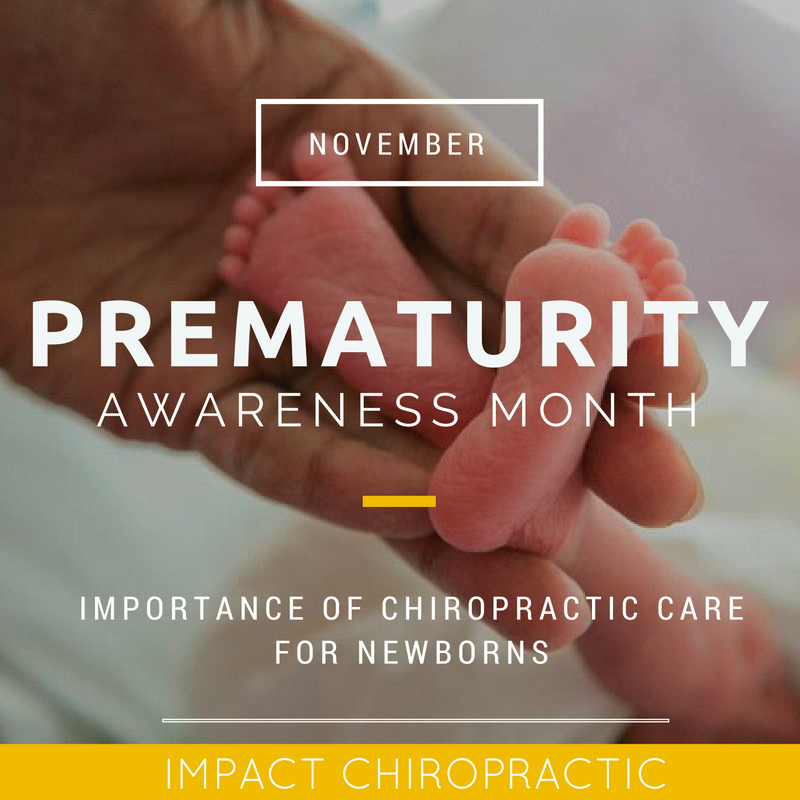
November 17th kicks off Prematurity Awareness Month and at Impact Chiropractic, we see many premature and full-term babies. Although premature delivery is not always preventable, there are steps parents can take to make sure their little ones thrive right from birth.

 The benefits of chiropractic care for premature babies

Our hospitals provide wonderful care in the NICU, but what about the life of these preemie babies after they leave there? Premature babies are at greater risk of breathing difficulties, feeding, digestion, and brain development. When infants stay in the NICU longer, the areas they work on are supporting vital organ development, such as brain, lung and gastrointestinal functions. Physical manifestations of prematurity are easily seen and well understood, but the neurological development is hard to study and difficult to tell until they are school age kiddos.

Research shows that 40% of premature babies develop mild motor impairments such as fine motor skills (tasks such as doing puzzles or holding pencils), motor planning (seeing an object on the floor and walking around it), visuomotor coordination (writing and drawing) and sensorimotor skills (feeling the weight of an object and successfully handling it). Preemies struggle with GERD and reflux. It also shows that language development can be delayed. Attention and behavioral deficits, such as learning disabilities and ADHD, also exist in these kiddos.

Another research study looked at “5-year- olds born between 1996 and 1997 with birth weights of less than 1,000 grams, 51 percent had coordination problems, 18 to 20 percent had abnormal reflexes or abnormal posture, and 17 percent had exceptional involuntary movements (1). Sensorimotor integration problems can range from inability to tolerate certain textures of food or clothing (e.g., an inability to tolerate lumpy food or the tag on the back of a T-shirt) to difficulty following demonstrated directions (e.g., how to put on a shirt or tie shoelaces) or an inability to tolerate motion (e.g., swinging).

These tasks include drawing, cutting with scissors, dressing, writing, copying figures, perceptual mapping, spatial processing, finger tapping, and pegboard performance. As with other neurodevelopmental disabilities and school problems, the prevalence of learning disabilities increases with decreasing gestational age and birth weight: 7 to 18 percent in children born full term, 30 to 38 percent in children born with birth weights 750 to 1,499 grams, 66 percent in children born at less than 28 weeks of gestation, and 50 to 63 percent in children born with birth weights less than 750 grams.

Work also needs to be done to develop treatment strategies that prevent injury to the brain and other organs and support the infant’s ongoing development.” (2) This research article notes the problems that revolve around premature births, but at the time they were unsure about how to resolve these issues. Another study looked at the difference in living environments of premature infants when they go from the mother’s womb to a bed in the NICU. When premature babies are in the NICU, they tend to be stationary and lying flat on their backs in the beds. This increased time spent lying flat increases the likelihood of deformational plagiocephaly (flattening of the skull bones) which in turn leads to neurodevelopment disadvantages.(3) This, along with the birth process, can cause problems to the developing nervous system.

As chiropractors, we find cranial and/or vertebral misalignments and gently restore them to their proper position, with no adverse side effects. Chiropractic adjustments allow the brain to communicate with the rest of the body, and the body sends proper signals back up to the brain. This is how adjustments can help with motor tasks and also helps with learning difficulties. When it comes to GERD, premature babies have an incompetent lower esophageal sphincter. The problem with this sphincter causes reflux, spit up, fussy and colicky babies. Chiropractors can help the nerves wire to that organ, so the sphincter can work as soon as possible and gastric acid doesn’t flow into the esophagus.

Let your local pediatric chiropractor help your little one. If you have any questions about chiro care, let us know. We’d love to help give your child the best life possible.

1. Mikkola: Mikkola K, Ritari N, Tommiska V, Salokorpi T, Lehtonen L, Tammela O, Paakkonen L, Olsen P, Korkma, Fellman V. for the Finnish ELBW Cohort Study Group. Neurodevelopmental outcome at 5 years of age of a National Cohort of extremely low birth weight infants who were born in 1996-1997. Pediatrics. 2005;116(6):1391–1400. [PubMed] [Reference list]

2. (Institute of Medicine (US) Committee on Understanding Premature Birth and Assuring Healthy Outcomes; Behrman RE, Butler AS, editors. Preterm Birth: Causes, Consequences, and Prevention. Washington (DC): National Academies Press (US); 2007. 11, Neurodevelopmental, Health, and Family Outcomes for Infants Born Preterm. Available from: https://www.ncbi.nlm.nih.gov/books/NBK11356/)

3. Improvement in prematurity outcome- A chiropractic case report Carmel Therese Whelan, DICCP. Journal of Clinical Chiropractic Pediatrics, Volume 14, March 2014.

Filed Under: PEDIATRIC CHIROPRACTOR Tagged With: benefits of Chiropractic Care for Infants, chiropractor and colic, colic and chiropractic care, infant chiropractic care, preemies and chiropractic care

STUTTERING AWARENESS

October 22, 2017 by Impact Chiropractic

October 22nd is Stuttering Awareness Day.  Many people know someone who struggles with stuttering, and those people go through intensive speech therapy in order to get the stuttering under control.  It is estimated that fifteen million people in the world stutter.  Many children and adults in Fort Collins are faced each and every day with difficulty speaking.  These people have fear, embarrassment, and may be left hopeless.  What if there was another way at figuring out why these people stutter?

 Stuttering and chiropractors

“Normal speech requires the brain to control movement of the mouth and vocal chords using the sound of the speaker’s own voice as a guide. This integration of movement and hearing typically happens in the brain’s left hemisphere, in a region of the brain known as the premotor cortex. In those who stutter, however, the process occurs in the right hemisphere—probably because of a slight defect on the left side, according to past brain-imaging studies” (quote originally posted at https://www.scientificamerican.com/article/the-stuttering-brain/)

These findings are interesting to note, because many times stuttering is thought of as a speech-related problem, when in fact it is a brain problem.  There is a miscommunication with the connection between the brain and the mouth; there is a problem with the sensory integration of the two.  For some reason, the nervous system is not communicating with the speech organs (mouth, tongue, lips) in a proper way and the person starts to stutter.  Misalignments to the spine cause a problem with the flow of information from the brain to the body, and the body to the brain.  By taking out the interference of the nervous system, the brain and body can work in proper unison again.

Although common for children to experience short-term stuttering, it is not “normal” if it is prolonged or is occurring after the age of five.  Some common signs that your child is struggling are: repetitions of whole words, increased prolongation of words, increased facial tension while speaking, vocal tension, fear/avoidance of speaking, avoiding certain words for fear of stuttering.  If you notice your child doing any of these behaviors, get them checked by a chiropractor.  Chiropractic care works by improving the function of the nervous system.  When children get adjusted, they calm down, slow down, rest and fully process information.

These findings are interesting to note, because many times stuttering is thought of as a speech-related problem, when in fact it is a brain problem.  There is a miscommunication with the connection between the brain and the mouth; there is a problem with the sensory integration of the two.  For some reason, the nervous system is not communicating with the speech organs (mouth, tongue, lips) in a proper way and the person starts to stutter.  Misalignments to the spine cause a problem with the flow of information from the brain to the body, and the body to the brain.  By taking out the interference of the nervous system, the brain and body can work in proper unison again.

Although common for children to experience short-term stuttering, it is not “normal” if it is prolonged or is occurring after the age of five.  Some common signs that your child is struggling are: repetitions of whole words, increased prolongation of words, increased facial tension while speaking, vocal tension, fear/avoidance of speaking, avoiding certain words for fear of stuttering.  If you notice your child doing any of these behaviors, get them checked by a chiropractor.  Chiropractic care works by improving the function of the nervous system.  When children get adjusted, they calm down, slow down, rest and fully process information.

Filed Under: PEDIATRIC CHIROPRACTOR Tagged With: chiropractic care and stuttering, what helps stutter, what helps to stop stuttering

5 MYTHS ABOUT CHIROPRACTIC CARE FOR KIDDOS

October 17, 2017 by Impact Chiropractic

MYTH #1:  CHIROPRACTIC CARE OF CHILDREN IS NEW.

People may think that adjusting children is a new approach to health.  When you hear the word “new” you may think untested, experimental and dangerous.  “This is simply untrue.  ‘If you go back to 1910, [founder of chiropractic] D.D. Palmer indicated how important it is to check a child’s spine from birth and throughout life,’ notes Jeanne Ohm, CEO of the International Chiropractic Pediatrics Association (ICPA), a non-profit organization in Philadelphia.”

Throughout the years, pediatric chiropractic has gained more research and doctors have been fine-tuning their skills. In 1986, Dr. Larry Webster re-established chiropractic care for children as a legitimate area of focus. He created the ICPA and began teaching his child-friendly techniques to other chiropractors who had a passion for helping children

MYTH #2:  CHILDREN DON’T NEED CHIROPRACTIC CARE.

Kiddos absolutely need chiropractic care, they have spines just like everyone else.  The vertebra protect the nervous system, the same way they do in mature adults.  There is also a link between the central nervous systems and various childhood illnesses/complications such as ear infections, colic, attention deficit disorder.  Chiropractors do not treat these afflictions, but they allow the body to reach health all on its own.  Other common problems chiropractic care can address are difficult latching, favoring one side while breast feeding, reflux, and sensory processing problems.  These problems can begin immediately after the birthing process, especially when interventions have been used.

 chiropractic care for kids

Birth is not easy on the mother or the baby, and both should be checked during pregnancy and immediately after birth.  Misalignments to the babies spine can occur and if they aren’t checked quickly, they can develop into the problems discussed previously.  As development progresses, postural and function patterns begin to form and these misalignments can be more difficult to correct later.

MYTH #3: CHIROPRACTORS USE THE SAME TECHNIQUES ON CHILDREN AS ADULTS.

 baby with colic remedies Chiropractors do not use the same technique on children.  The spines of children are different from those of adults, and are assessed differently. Before the age of six, bones are mostly made up of cartilage, and not the hard bony material we usually think of.  This immaturity of bones causes them to be misaligned in ways that adult bones do not.  Pediatric adjustments are very gentle and use light pressure and minimal force.  Many times the child will move into the correct position all on there own.  We are there to facilitate the adjustment, but the child usually holds and maintains the position all on their own.

MYTH #4: THERE ARE NO REAL EXPERTS IN CHIROPRACTIC CARE FOR CHILDREN.

Many chiropractors follow accredited courses to develop child-specific skills.  Dr. Elise and Dr. Lara have both completed the ICPA program.  This program consists of a 200-hour certification program, which involves 14 classroom modules.  When searching for a pediatric chiropractor in Fort Collins, make sure they have taken these ICPA classes.  Along with this program, they have both spent countless hours doing external work in pediatric and prenatal education.

MYTH #5: CHIROPRACTORS DON’T COLLABORATE WITH PEDIATRICIANS AND MEDICAL DOCTORS.

This myth couldn’t be farther from the truth.  At Impact, Dr. Elise and Dr. Lara want to be in communication with their patient’s pediatricians and other primary care physicians.  We want to collaborate with all doctors in the Fort Collins area.  It is much easier to work together rather than to downgrade the different approaches to health and well-being.  We want to put the patient’s best interest first, and give them the best care possible.

This post was adapted from https://circleofdocs.com/five-myths-about-chiropractic-care-for-children/

Filed Under: PEDIATRIC CHIROPRACTOR Tagged With: children and chiropractic care, chiropractic care for kids, kids and chiropractors, why kids should see a chiropractor

PRENATAL AND POSTNATAL CARE

October 6, 2017 by Impact Chiropractic

Chiropractic care is important while a woman is pregnant.  Regular care can reduce pain and decrease pregnancy related symptoms, but it is important for optimal growth and development of the baby as well. As chiropractors in Fort Collins, Dr. Elise and Dr. Lara are both Webster certified and love to see mothers throughout their pregnancy.  Although it is extremely important to be checked in pre-natal stages, it is also vital to get checked post-natal.

“During pregnancy, your spine and the soft tissues of your body undergo the most rapid transformation that they will go through in your entire life. The first part of this change happens over a nine-month period, but the second part of this change (the return to previous form) happens more rapidly, as the weight of the baby is suddenly no longer there. Your body is able to integrate these changes with more ease when you receive chiropractic care. In fact, many of the common symptoms during pregnancy, especially neck pain, back pain, headaches and heartburn, are related to the stress on your nervous system from this rapid change. Remember, the spine encases the central nervous system and when it is misaligned, it can put tension on the exiting nerves and decrease normal function. The same goes for the fourth trimester. Your spine is trying to adjust to the absence of the baby in your belly. Chiropractic adjustments aid beautifully in this process to realign your spine and pelvis.

Your spine is also very “soft” at the end of pregnancy. Your body has produced a hormone called relaxin to soften the joints and ligaments and allow for your pelvis to open wide and birth your baby. As you begin to nurse your baby and carry him in your arms, you may find that you feel back pain and headaches again because this softness allows your joints to become misaligned more easily. Once again, chiropractic is an excellent way to restore function and reduce pain and discomfort.”

– The full article can be found at: https://pathwaystofamilywellness.org/The-Outer-Womb/the-fourth-trimester-a-guide-to-healthy-postpartum-recovery.html#sthash.0Y69w6VU.dpuf

Filed Under: PEDIATRIC CHIROPRACTOR, PRENATAL CHIROPRACTOR Tagged With: chiropractic care during pregnancy, chiropractor and pregnancy, postnatal chiropractors, pregnancy and chiropractors, prenatal chiropractic care

CHIROPRACTIC CARE FOR CHILDREN

October 5, 2017 by Impact Chiropractic

The following post discusses common questions that may arise when considering chiropractic care for your children.  At Impact Chiropractic, we know it is vital to check the spine and nervous system of every child.

Chiropractors have been caring for children for more than a 100 years. Many common childhood ailments will respond to this safe, natural form of health care. More and more parents— especially those who are already chiropractic patients themselves—are seeking chiropractic care for their children.

WHAT IS CHIROPRACTIC CARE?

Chiropractic is based on the important relationship between the spine and the nervous system. One of the most basic ideas in chiropractic is that dysfunction in the spine and its joints can lead to dysfunction within the nervous system—and since the nervous system controls and coordinates all of the systems of the body, spinal dysfunction can have wide ranging effects on the body’s health. Chiropractors are trained to evaluate and adjust this spinal dysfunction.

WHY DO MY CHILDREN NEED CHIROPRACTIC?

A child encounters many physical stresses during their growing years. The resulting problems in children’s spines can occur at almost any point in their development and growth.

The earliest challenge a growing spine faces is the position it is forced to adopt in-utero. Many women will have heard of fetal positions that can cause problems with labor (brow, breech, transverse, posterior, ascynclitic, etc). What is less well known is that these fetal positions can also cause problems in the baby’s spine as well. Spinal segments can be pushed out of place or jammed by the position of the baby in the womb. If this position is less than optimal, it can result in a longer and more difficult trip through the birth canal, which can compound the spinal problems. In this way, even natural birthing methods can stress an infant’s spine and nervous system—not to mention interventions such as induction, forceps, vonteuse suction, or cesarean section. The latter (which account for an alarmingly large percentage of births in Australia), while appear to offer a less traumatic birth for the child, can actually create additional traumas and compromises to the infant’s future health and well-being.

The cause of many newborn health complaints such as colic, reflux, breastfeeding difficulties, sleep disturbances, allergic reactions, and chronic infections can often be traced to nervous system irritation caused by spinal and cranial misalignments.

Since significant spinal trauma can occur at, or prior to birth, many parents elect to have their newborn’s spine checked right after birth. Many developmental milestones such as learning to hold up the head, sitting upright, crawling, and walking are all activities that are affected by spinal alignment and are important times to have a child checked by a chiropractor. Additionally, falls, sports injuries, playground bumps, heavy school bags and sitting all day in the classroom are all physical stresses to the growing child’s spine and nervous system.

WHAT DOES CHIROPRACTIC CARE INVOLVE?

The first thing a chiropractor will do is to conduct a thorough history of your child’s health and any complaints. This is followed by a complete physical examination of the child’s spine. Most chiropractors are trained to evaluate pediatric spinal problems, and will use gentle, specific skills to find and adjust any involved spinal areas.

When I tell people that I care for many children and babies in my practice, their initial reaction is often one of surprise, as they assume that I use the same techniques on children as I do on adults. Chiropractic care is ‘tailored’ to the individual and their particular spine, and children are no exception. We offer specific, gentle adjustments appropriate to the infant and child’s spine and cranium.

Spinal adjustments for infants and young children involve very light fingertip pressure to correct spinal misalignments. This amount of “force” is often not more than a finger touch. This is usually sufficient to restore mobility to spinal joints which have become locked and are causing interference to the normal nervous system function. Occasionally, the adjustments will make a ‘popping’ sound when the spinal joints are moved; however, this is not always heard when children’s spines are adjusted. Other techniques involve the use of hand-held instruments which offer specific and gentle correction.

DOES IT HURT?

In general, chiropractic care for children is painless, except in cases where the child has an actual injury. In these areas, the child may be sensitive to touch; however, once the adjustment has been made and the area can heal more effectively, the sensitivity is alleviated. Overall, most parents report that their children enjoy their spinal adjustments, and that they look forward to their next visit.

HOW LONG WILL IT TAKE?

A child’s spine will generally respond much faster than an adult’s spine to chiropractic adjustment, and will often require only a few adjustments to restore normal function. The actual number of adjustments will vary depending on many factors such as the length of time the problem has been present.

IS IT SAFE?

The risks of a child suffering notable injury from a spinal adjustment are extremely minimal. Chiropractors have been adjusting children’s spines for more than 100 years and have an excellent safety record.

A recent study done by the International Chiropractic Pediatric Association (ICPA) in the United States, Canada, and Europe showed that only a few children (out of more than 10,000 visits) experienced minor discomfort and fussiness. The remaining children in the study had no adverse reactions to the adjustment. These preliminary data tells us that chiropractic care for children may be one of the safest forms of health care available. Australian ICPA chiropractors will be participating in a similar study as well.

HOW CAN I TELL IF MY CHILD HAS SPINAL PROBLEMS?

Unless a child has an obvious problem it can be difficult for a parent to recognize when a child’s spine is not working correctly. There are some signs which can indicate spinal problems. These include:

  • disturbed sleeping patterns
  • breastfeeding difficulties in the very young
  • restricted head or neck movement to one side
  • one shoulder higher than the other

Common childhood disorders can also be linked with spinal dysfunction, these include:

  • recurrent ear infections
  • persistent sore throats and colds
  • colic/reflux
  • asthma
  • scoliosis
  • headaches
  • bedwetting and/or constipation
  • growing pains
  • ADHD

One of the most common reasons for parents to seek chiropractic care for their child is physical trauma from an injury of some sort. The spinal misalignments that may occur at the time of the injury will not necessarily result in immediate pain or symptoms. In addition to physical stress, parents should be aware that emotional and chemical stress affect the child’s nervous system and may also warrant a spinal check up.

Regular chiropractic checkups can identify potential spinal dysfunction resulting from these stresses, and chiropractic adjustments may help to enhance future function and well-being.

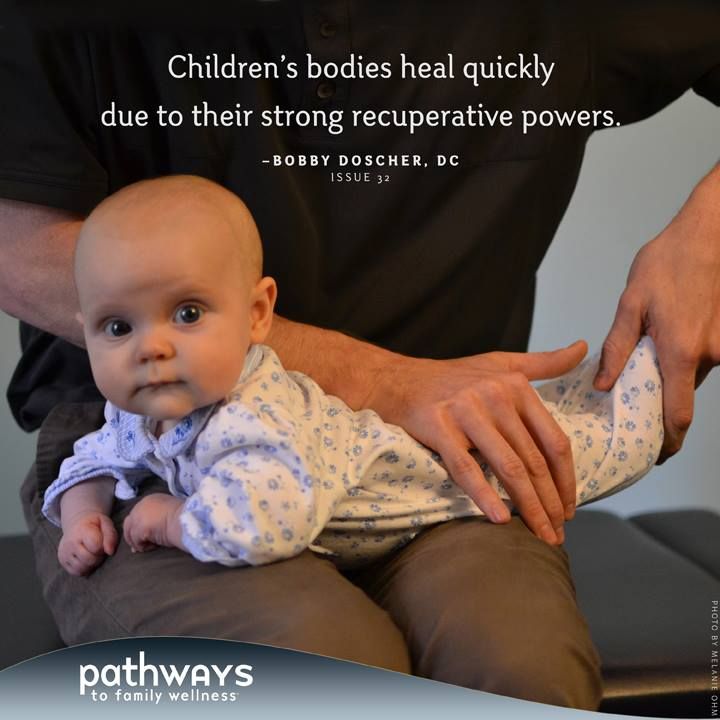
This article originally appeared in Pathways to Family Wellness magazine, Issue #18 and was written by Belinda Siddle, D.C on Sunday, 01 June 2008.  The article can also be found at https://icpa4kids.org/Wellness-Articles/chiropractic-care-for-children/All-Pages.html

Filed Under: PEDIATRIC CHIROPRACTOR Tagged With: children and chiropractic care, chiropractic care for kids, chiropractor for kids

BACK TO SCHOOL, BACK TO FOCUSING

September 9, 2017 by Impact Chiropractic

As Labor Day marks the “unofficial” end of summer, the kids get ready for another week of school.  Some parents struggle to let go, while others can’t wait to get their kids back into a routine.  It’s early in the school year so if your child is already struggling to focus, concentrate, or behave, take action now.

In our office, we help many children balance their energy levels.  Some children crave constant input and when they don’t receive it, they create it.  When their bodies have subluxations, or misaligned vertebra, their nervous system can go into overdrive.  Their gas pedal (or sympathetic nervous system) is stuck on and they can’t get themselves out of “flight or fight.”  They can’t sit still, they can’t focus, they can’t thrive and learn.  Chiropractors help by activating the brake pedal (or the parasympathetic nervous system) and allow their body to slow down and regulate itself.  Adjustments and also proprioceptive activities can help these kiddos throughout the school year.

Impact Chiropractic specializes in pediatric chiropractic in Fort Collins.  We know how important it is for your child to learn and get the most out of school.  Bring them in to get adjusted, but also incorporate some of the following proprioceptive activities during their school day.

  1. Ask the teacher to give them classroom chores.  This will get them up and moving, and give them an important task to complete.
  2. Tie a Theraband around the front of their desk for them to kick.
  3. Buy them pencil grips
  4. Allow them to have a balloon filled with flour or sillyputty, to keep their hands busy.
  5. Give them gum to chew, if allowed by the school and/or the teacher
  6. Active recess games such as jump rope, football, playing catch with heavy balls/bean bags

For more ideas about how to get your child to focus during class, ask one of our doctors!  Back to school should be fun and exciting for your kiddos, and not be stressful and difficult.  Keep the kids well adjusted so they can get the most out of their school day!

Check in with our Facebook page for updates, educational articles, and cute pictures of our wonderful patients.

Filed Under: PEDIATRIC CHIROPRACTOR Tagged With: benefits of chiropractic care for kids, chiropractic care, chiropractor for kids, popular posts

  • « Go to Previous Page
  • Page 1
  • Page 2
  • Page 3
  • Page 4
  • Page 5
  • Go to Next Page »

Primary Sidebar

Footer


FORT COLLINS, CO

3720 S College Ave
Fort Collins, CO 80525
(970) 223-5501


LOVELAND, CO

1661 Rocky Mountain Ave, Suite 302
Loveland, CO 80538
(970) 966-7105

Impact Chiropractic logo

FORT COLLINS,
CO

3720 S College Ave Fort Collins, CO 80525

(970) 223-5501

Make an Appointment

LOVELAND,
CO

1661 Rocky Mountain Ave, Loveland, CO 80538

(970) 966-7105

Make an Appointment

CHERRY HILLS VILLAGE, CO

5002-B East Hampden Ave Denver, CO 80222

(720) 263-2687

Make an Appointment

GOLDEN,
CO

17211 S Golden Rd Ste 110, Golden, CO 80401

(720) 750-6605

Make an Appointment
  • HOME
  • ABOUT
  • BLOG
  • OUR SERVICES
  • COMMUNITY PERKS PROGRAM
  • PRIVACY POLICY
Accessibility

Impact Chiropractic LLC is a community-driven health center in Colorado, helping all people achieve a better quality of life through whole-person chiropractic care.

© 2026 Impact Chiropractic LLC. All Rights Reserved. All site content is protected by U.S. and international copyright laws. Patient information is kept private and handled in compliance with HIPAA. Unauthorized use, reproduction, or distribution of any content on this site is strictly prohibited.