• Skip to main content
  • Skip to primary sidebar
  • Skip to footer
Impact Chiropractic logo
  • NEW PATIENTS
    • ONLINE FORMS
    • YOUR FIRST VISIT
    • PHASE 1: RELIEF CARE
    • PHASE 2: CORRECTIVE CARE
    • PHASE 3: WELLNESS CARE
    • FAQS
    • PAYMENT OPTIONS
    • HEALTH RESOURCES
  • LOCATIONS
    • FORT COLLINS, CO
    • LOVELAND, CO
    • CHERRY HILLS VILLAGE, CO
    • GOLDEN, CO
  • SERVICES
    • PEDIATRIC CARE
    • PRENATAL CARE
    • AUTO ACCIDENTS
    • SPINAL SCOLIOSIS
    • SPORTS REHABILITATION
    • CORPORATE WELLNESS PROGRAMS
    • SOFTWAVE
  • ABOUT
    • TESTIMONIALS
Book Now

PEDIATRIC CHIROPRACTOR

Text neck: what it is and how to fix it

December 21, 2022 by Impact Chiropractic

Do you ever look around and see kids hunched over looking at their phones? Is your child complaining about neck pain? Are you concerned that your teenager spends way too much time on their screen and it’s bad for their posture? Well, this is a real problem in today’s society. We are starting to see a new pandemic amongst our youth, and it is known as “text neck”. If you look at young kids these days when they are on their phones, it is pretty obvious what the issue is. They are hunched over with their head hanging down in a poor position for hours at a time. This is causing a lot of issues with their spinal health. More than ever, kids today are complaining about neck and back. Cell phone use is the reason. 

Growing up, it was very common for parents to get on their kids’ case about sitting up straight and having good posture. It is no mystery that having bad posture is very not good for your health. But why is that exactly? I’ll tell you. For every inch that your head is hanging forward past the normal position, you add about 10 pounds of pressure onto your spinal cord. It basically acts as a tether where the head hanging down is causing tension and pulling on the rest of the spine. This is very stressful for the spine and lower back muscles. This is what leads to back pain. Overtime, if this tether situation continues, this back pain will become more and more chronic and harder and harder to correct. If you don’t want your child to end up with chronic back pain in their 20s or 30s, follow these very easy steps on how to avoid or correct text neck in your children.

  1. Hold your screen at eye level. If we are looking down and leaning forward to look at our screens, we can easily correct this problem by bringing our cell phone up to match our eyes at I level. This may feel silly or uncomfortable at first, but I guarantee that overtime your neck and shoulders will feel a whole lot better when they are not strained by looking down all the time.
  2. Limit screen time. The easiest way to correct text neck is to reduce texting and social media. This problem is directly connected to the amount of time spent looking at the screen. Not only will this give your neck muscles a break, but it will give your brain and eyes break from all the simulation and lights. iPhone allows you to set App Limits for certain apps in the Screen Time section. 
  3. Take frequent breaks. If you or your children have to spend a lot of time on the computer at work, or at a desk in the classroom, you can at least take breaks to give your muscles a reset. I recommend that you set a timer for every 30 minutes to get up from your seat and walk around the house or the office. You can also stand up and stretch. Getting up and resetting your posture will help you feel better and alleviate pain, even if you only do it for only a few minutes.
  4. Exercise/stretch consistently. Incorporating a regular exercise routine is one of the best things that you can do for you and your children’s spinal health. It is recommended that you exercise at least 3 days a week for 60 minutes a day. You can look into hiring a personal trainer, going to fitness classes, or getting a membership at your local rec center where you have access to a weight room, a pool, and lots of fun activities to keep you moving and healthy.
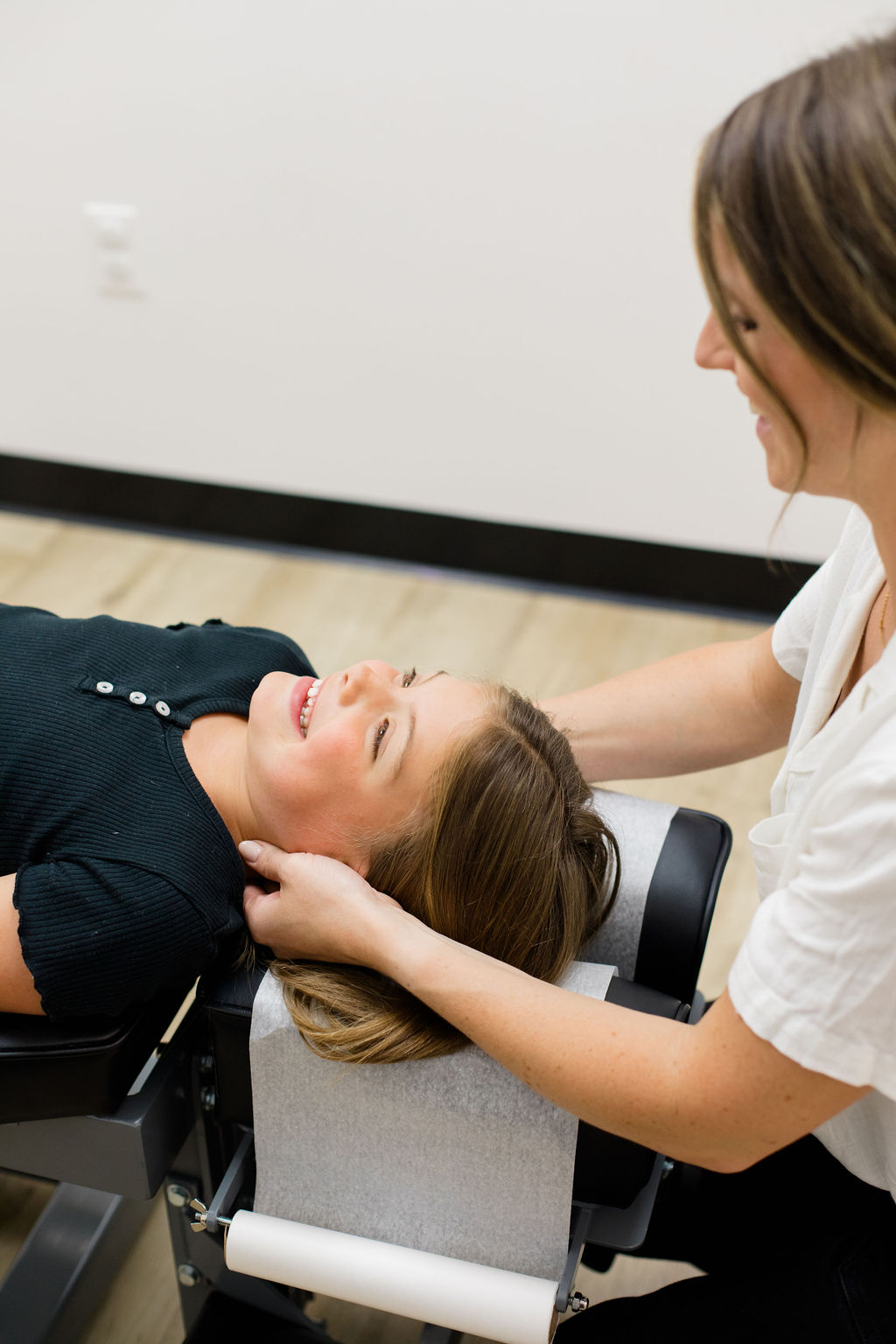
  5. See a chiropractor. One of the best things that you can do for yourself or your child to correct your posture and avoid this chronic to text neck issue is to see a chiropractor regularly. Just as you would go to a dentist for regular check ups, it’s important to go to a chiropractor to get your spine checked too. Especially when we are constantly liking our screens. Keeping your spine in proper alignment is the best thing that you can do for your posture and overall health.

Written by Dr. Alison Bremner

Filed Under: PEDIATRIC CHIROPRACTOR

AUTISM AND THE NERVOUS SYSTEM

April 12, 2022 by Impact Chiropractic

Autism, or Autism Spectrum Disorder, refers to a range of conditions characterized by challenges with social skills, repetitive behaviors, speech, and nonverbal communication, as well as unique strengths and differences. Researchers have found that there is no one form of autism but many types. Autism is caused by different combinations of genetic and environmental influences. The Centers for Disease Control and Prevention (CDC) estimates autism’s prevalence as 1 in 68 children in the United States. This includes 1 in 42 boys and 1 in 189 girls.  Nearly a quarter-century ago, the Autism Society launched a nationwide effort to promote autism awareness and ensure that each person with ASD has the opportunity to achieve the highest possible quality of life. We outline just a few educational challenges, health challenges, and how chiropractic can help below. 

EDUCATIONTIONAL CHALLENGES

Each year an estimated 50,000 teens with autism become adults and lose school-based services. These schools are equipped to deal with the social and mental development associated with autistic students. Unfortunately, this special training commonly ends upon high school graduation. This is one of the things Autism Societies would like to change. The goal is to further the education of these students which could decrease the one-third of young adults with ASD that never get a job or continue their education after high school.

The Strengthening Career and Technical Education for the 21st Century Act is legislation that supports career and technical education (CTE) programs and helps autistic students gain skills necessary for employment by reauthorizing the Carl D. Perkins Career and Technical Education Act of 2006. The legislation was signed into law on July 31, 2018. 

HEALTH CHALLENGES

Autism is frequently accompanied by certain medical and mental health issues. They include gastrointestinal (GI) disorders, seizures, sleep disturbances, attention deficit and hyperactivity disorder (ADHD), anxiety, phobias, and decreased immune responses. We know that the nervous system is so intimately linked with the digestive and immune systems. Because of that, by adjusting the spine and realigning the misalignments in those areas, proper neurological “signaling” into and out of the central nervous system can be achieved. This can help with sensory processing, social interaction, and behavioral and learning processes as well. Relieving the nervous system’s state of stress or applying the ”brakes” to the overactive nervous system, allows it to function at its optimum level. 

CHIROPRACTIC AND AUTISM

One way to assess the nervous system is to get it evaluated by a trained Pediatric Chiropractor. Pediatric Chiropractors are the only professionals that have a nervous system focus as well as the training and technology to analyze and detect any interference in the function of the nervous system. This type of chiropractic offers diagnostic testing similar to the technology you would see by going to a specialist. The results help us decide the best way to treat the patient to improve the function of the nervous system.

Autism Awareness Month is the whole month of April. It is so important to foster awareness and educate ourselves so that we can better serve autistic individuals.

To learn more:

https://www.autism-society.org/get-involved/national-autism-awareness-month/

https://www.autismspeaks.org/what-autism

Filed Under: HEALTH & WELLNESS, PEDIATRIC CHIROPRACTOR Tagged With: autism, autism and chiropractic care, autism and the nervous system, chiropractor an autism

How’s the Latch? Top 5 Ways Chiropractic Can Help!

March 29, 2022 by Impact Chiropractic

Breastfeeding

Breastfeeding is a great option when choosing how to feed your child. There are numerous neurological, nutritional, developmental, psychological, and immunological benefits that your baby can get throughout the process.  Due to this many mothers plan on breastfeeding, but give up early because of problems that have “no solution.” When you and your baby are first getting to know each other, it can be frustrating at times.  Many times mamas have trouble getting their baby to nurse. It’s hard!! It’s easy to be discouraged and want to give up. We’re here to tell you to stay strong. It’s not your fault that your little one isn’t latching properly, but there is something you can do to help support the relationship.

How Chiropractic Helps the Latch

In our office we see many infants presenting with latching problems, and after being evaluated and adjusted they are able to feed wonderfully. Specifically, we check children for vertebral subluxations. This occurs when the upper cervical vertebra or cranial bones are misaligned. This misalignment puts unnecessary stress on the nervous system, meaning the brain and the body may not be fully communicating as they should. It’s basically taking a dimmer switch and putting it on the nerves that come out at the level of the misalignment. This can cause numerous problems with the child’s health and development down the road.

The birthing process, no matter how natural and beautiful it is, can be hard on not just the mother but the child as well. In turn, this can result in misalignments that usually go undetected and unaddressed for years.  As chiropractors, we see infants presenting with difficulties latching firmly, inability to sustain suckling, only feeding in one position, chewing instead of suckling on the nipple, and a “need” to feed at all times. 

Benefits of Chiropractic for an Infant

When the C1 vertebra and cranial bones are properly aligned, neurological and mechanical problems resolve as shown below:

Helps baby turn head to go to both breasts equally

  • When the misalignment of the cranial and upper cervical vertebrae are present this will impinge the SCM muscle. This can cause extra tension in one side vs the other and in more extreme cases, Torticollis. When a baby has this, they will not want to turn their head to both sides equally and often favor one breast. Realigning the bones and allowing the nerves to communicate with the muscle properly, helps the baby to turn their head to both sides equally. In turn, they have easier positioning and access to breastfeeding.

Retraining muscle patterns

  • Another common difficulty we see, is that their suckle pattern is weak, irregular or using the wrong muscles. The communication into the muscles used primarily for sucking may not be firing correctly (weak suckle). This can lead to overcompensation and recruitment of muscles not originally needed for the motion. This can cause an irregular, or chewing like suckle. Again, realigning any misalignments will allow all the muscles to get the proper communication.

Helping to shape mouth properly

  • With improper tongue and oral use, the palate can lack the proper stimulation it needs in order to properly shape. We see many infants presenting with shallow or high palates which is going to affect the suckle itself. We help to identify and reshape the mouth when working with babies in order to regain proper oral function in nursing and into childhood.

Help Tongue Tie Release Heal

  • Another great way we can support oral function is helping tongue tie releases heal. After a baby gets a release, it is up to the parents to perform stretches for the body to heal properly. However, if there is a miscommunication in the nerves, we often see that the body takes longer to heal. We love working with babies that recently had tongue tie revisions to ensure that the body can heal to its full potential.

Bring your Infant to a Pediatric Chiropractor

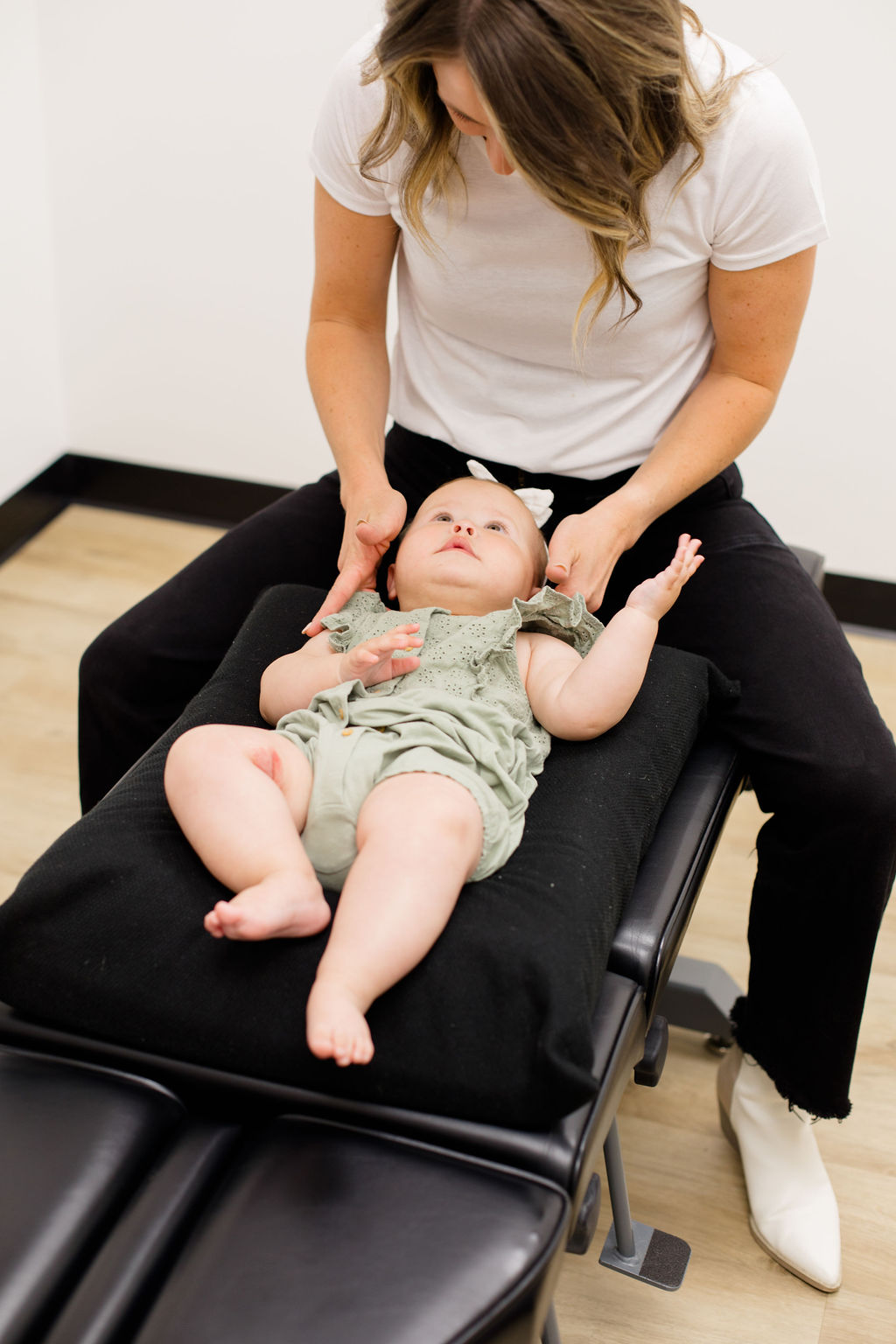
If your infant is having trouble nursing and you feel as though you’ve tried everything to help them, bring them to a chiropractor. Infant chiropractic adjustments are gentle, safe, and extremely effective.  This could be one of the most important choices you make for your child, as breastfeeding provides many benefits to their health.

Make a new patient appointment today for your infant!

Filed Under: PEDIATRIC CHIROPRACTOR, WOMEN'S HEALTH Tagged With: chiropractic adjustment, chiropractor in fort collins, first chiropractic adjustment, fort collins chiropractor, what to expect at the chiropractor

Diving into Neurodevelopmental Disorders

July 30, 2020 by Impact Chiropractic

neurodevelopmental disorders

In today’s current world there is a trend being seen with one in four kids growing up with neurodevelopmental disorders. These disorders are hard to diagnose due to the varying degree and severity of symptoms. Leading to many kids getting misdiagnosed or not diagnosed at all.

Neurodevelopmental disorders are classified as sensory processing disorder. This is seen when the function of the nervous system is altered where the brain has trouble receiving and responding to information that comes in through the senses. This can present in a lot of different ways including delayed development, incorrect responses to tasks or questions, inability to focus or sit still, forgetfulness, tantrums, colic, digestion issues, asthma, allergies, ect.

Another category of the neurodevelopmental disorders is ADHD in which the body actually gets overstimulated and goes into exhaustion. Due to this, the body responds to all stimuli by overworking the musculoskeletal system as its defense mechanism. This can cause symptoms like attention difficulties, hyperactivity, and impulsiveness.

The big issue with all these kids is dysregulation of the nervous system. 

In our nervous system we have two different modes that we can live in; a parasympathetic mode aka the brake pedal and then a sympathetic model aka the gas pedal. Your body ideally should stay in the parasympathetic mode where the body promotes growing, digestion, and rest. While the sympathetic mode is only needed for when the body is put in danger and you get an adrenaline rush. A huge thing that we see with these kiddos is they can get overwhelmed and stuck into this gas pedal mode. This can take all their energy and put it towards excessive muscle movement and prevent them from actually getting to digest food, rest, and develop. 

Chiropractors are specifically trained to detect any nervous system disruptions that are present in kiddos. The spine actually encases the spinal cord and nerves come out at every single level of the spine. Misalignments in the spine can alter how the nervous system functions in many ways. It can alter how a sensation is perceived, how then the sensation is processed, and can alter the body response to be different. Also having these issues in the spine will lead to being the stimulation of the fight or flight mode. Leading to dysfunction and miscommunication in the body. The main goal of chiropractic is to relieve any stress on the nervous system in order to process information better and have a higher overall function level in the body. 

The leading cause of this dysfunction in the nervous system is stress. When looking at kiddos there are three forms of stress that affect their body which include physical, emotional, and chemical. Physical stress is the most commonly thought of when looking at kids. Normal kids as they grow and develop are running around and falling down 20 times a day, affects their spine and nervous system. Another physical stress that is not often thought about is birth trauma. The process can be beautiful and natural but can be a lot for a little baby’s body. Up to 60-120 pounds of traction is applied to the baby’s neck and spine during a natural vaginal birth with a doctor assisting head out.  This causes trauma in the spine and in turn the nervous system. Emotional stress includes any family, school, or relationship issues. Kids may not be able to know exactly what is going on but can get worked up and put their bodies into a stressed and sympathetic mode. Lastly, chemical stress is anything that kids eat or put on their body, that the body in turn has to process. 

For these kids it is important to get their nervous system checked allowing them the best environment in order to develop to their fullest potential and handle all the day to day stress. Get them out and exercising to help their body develop needed motor skills to allow full development. Good nutrition is always needed in order to fuel the body and grow new cells. 

Wondering if chiropractic care is right for you child? Learn more about pediatric care at Impact Chiropractic.

Filed Under: HEALTH & WELLNESS, PEDIATRIC CHIROPRACTOR

WORLD PREMATURITY DAY

November 17, 2017 by Impact Chiropractic

November 17th kicks off Prematurity Awareness Month and at Impact Chiropractic, we see many premature and full-term babies. Although premature delivery is not always preventable, there are steps parents can take to make sure their little ones thrive right from birth.

 The benefits of chiropractic care for premature babies

Our hospitals provide wonderful care in the NICU, but what about the life of these preemie babies after they leave there? Premature babies are at greater risk of breathing difficulties, feeding, digestion, and brain development. When infants stay in the NICU longer, the areas they work on are supporting vital organ development, such as brain, lung and gastrointestinal functions. Physical manifestations of prematurity are easily seen and well understood, but the neurological development is hard to study and difficult to tell until they are school age kiddos.

Research shows that 40% of premature babies develop mild motor impairments such as fine motor skills (tasks such as doing puzzles or holding pencils), motor planning (seeing an object on the floor and walking around it), visuomotor coordination (writing and drawing) and sensorimotor skills (feeling the weight of an object and successfully handling it). Preemies struggle with GERD and reflux. It also shows that language development can be delayed. Attention and behavioral deficits, such as learning disabilities and ADHD, also exist in these kiddos.

Another research study looked at “5-year- olds born between 1996 and 1997 with birth weights of less than 1,000 grams, 51 percent had coordination problems, 18 to 20 percent had abnormal reflexes or abnormal posture, and 17 percent had exceptional involuntary movements (1). Sensorimotor integration problems can range from inability to tolerate certain textures of food or clothing (e.g., an inability to tolerate lumpy food or the tag on the back of a T-shirt) to difficulty following demonstrated directions (e.g., how to put on a shirt or tie shoelaces) or an inability to tolerate motion (e.g., swinging).

These tasks include drawing, cutting with scissors, dressing, writing, copying figures, perceptual mapping, spatial processing, finger tapping, and pegboard performance. As with other neurodevelopmental disabilities and school problems, the prevalence of learning disabilities increases with decreasing gestational age and birth weight: 7 to 18 percent in children born full term, 30 to 38 percent in children born with birth weights 750 to 1,499 grams, 66 percent in children born at less than 28 weeks of gestation, and 50 to 63 percent in children born with birth weights less than 750 grams.

Work also needs to be done to develop treatment strategies that prevent injury to the brain and other organs and support the infant’s ongoing development.” (2) This research article notes the problems that revolve around premature births, but at the time they were unsure about how to resolve these issues. Another study looked at the difference in living environments of premature infants when they go from the mother’s womb to a bed in the NICU. When premature babies are in the NICU, they tend to be stationary and lying flat on their backs in the beds. This increased time spent lying flat increases the likelihood of deformational plagiocephaly (flattening of the skull bones) which in turn leads to neurodevelopment disadvantages.(3) This, along with the birth process, can cause problems to the developing nervous system.

As chiropractors, we find cranial and/or vertebral misalignments and gently restore them to their proper position, with no adverse side effects. Chiropractic adjustments allow the brain to communicate with the rest of the body, and the body sends proper signals back up to the brain. This is how adjustments can help with motor tasks and also helps with learning difficulties. When it comes to GERD, premature babies have an incompetent lower esophageal sphincter. The problem with this sphincter causes reflux, spit up, fussy and colicky babies. Chiropractors can help the nerves wire to that organ, so the sphincter can work as soon as possible and gastric acid doesn’t flow into the esophagus.

Let your local pediatric chiropractor help your little one. If you have any questions about chiro care, let us know. We’d love to help give your child the best life possible.

1. Mikkola: Mikkola K, Ritari N, Tommiska V, Salokorpi T, Lehtonen L, Tammela O, Paakkonen L, Olsen P, Korkma, Fellman V. for the Finnish ELBW Cohort Study Group. Neurodevelopmental outcome at 5 years of age of a National Cohort of extremely low birth weight infants who were born in 1996-1997. Pediatrics. 2005;116(6):1391–1400. [PubMed] [Reference list]

2. (Institute of Medicine (US) Committee on Understanding Premature Birth and Assuring Healthy Outcomes; Behrman RE, Butler AS, editors. Preterm Birth: Causes, Consequences, and Prevention. Washington (DC): National Academies Press (US); 2007. 11, Neurodevelopmental, Health, and Family Outcomes for Infants Born Preterm. Available from: https://www.ncbi.nlm.nih.gov/books/NBK11356/)

3. Improvement in prematurity outcome- A chiropractic case report Carmel Therese Whelan, DICCP. Journal of Clinical Chiropractic Pediatrics, Volume 14, March 2014.

Filed Under: PEDIATRIC CHIROPRACTOR Tagged With: benefits of Chiropractic Care for Infants, chiropractor and colic, colic and chiropractic care, infant chiropractic care, preemies and chiropractic care

STUTTERING AWARENESS

October 22, 2017 by Impact Chiropractic

October 22nd is Stuttering Awareness Day.  Many people know someone who struggles with stuttering, and those people go through intensive speech therapy in order to get the stuttering under control.  It is estimated that fifteen million people in the world stutter.  Many children and adults in Fort Collins are faced each and every day with difficulty speaking.  These people have fear, embarrassment, and may be left hopeless.  What if there was another way at figuring out why these people stutter?

 Stuttering and chiropractors

“Normal speech requires the brain to control movement of the mouth and vocal chords using the sound of the speaker’s own voice as a guide. This integration of movement and hearing typically happens in the brain’s left hemisphere, in a region of the brain known as the premotor cortex. In those who stutter, however, the process occurs in the right hemisphere—probably because of a slight defect on the left side, according to past brain-imaging studies” (quote originally posted at https://www.scientificamerican.com/article/the-stuttering-brain/)

These findings are interesting to note, because many times stuttering is thought of as a speech-related problem, when in fact it is a brain problem.  There is a miscommunication with the connection between the brain and the mouth; there is a problem with the sensory integration of the two.  For some reason, the nervous system is not communicating with the speech organs (mouth, tongue, lips) in a proper way and the person starts to stutter.  Misalignments to the spine cause a problem with the flow of information from the brain to the body, and the body to the brain.  By taking out the interference of the nervous system, the brain and body can work in proper unison again.

Although common for children to experience short-term stuttering, it is not “normal” if it is prolonged or is occurring after the age of five.  Some common signs that your child is struggling are: repetitions of whole words, increased prolongation of words, increased facial tension while speaking, vocal tension, fear/avoidance of speaking, avoiding certain words for fear of stuttering.  If you notice your child doing any of these behaviors, get them checked by a chiropractor.  Chiropractic care works by improving the function of the nervous system.  When children get adjusted, they calm down, slow down, rest and fully process information.

These findings are interesting to note, because many times stuttering is thought of as a speech-related problem, when in fact it is a brain problem.  There is a miscommunication with the connection between the brain and the mouth; there is a problem with the sensory integration of the two.  For some reason, the nervous system is not communicating with the speech organs (mouth, tongue, lips) in a proper way and the person starts to stutter.  Misalignments to the spine cause a problem with the flow of information from the brain to the body, and the body to the brain.  By taking out the interference of the nervous system, the brain and body can work in proper unison again.

Although common for children to experience short-term stuttering, it is not “normal” if it is prolonged or is occurring after the age of five.  Some common signs that your child is struggling are: repetitions of whole words, increased prolongation of words, increased facial tension while speaking, vocal tension, fear/avoidance of speaking, avoiding certain words for fear of stuttering.  If you notice your child doing any of these behaviors, get them checked by a chiropractor.  Chiropractic care works by improving the function of the nervous system.  When children get adjusted, they calm down, slow down, rest and fully process information.

Filed Under: PEDIATRIC CHIROPRACTOR Tagged With: chiropractic care and stuttering, what helps stutter, what helps to stop stuttering

  • « Go to Previous Page
  • Page 1
  • Page 2
  • Page 3
  • Page 4
  • Go to Next Page »

Primary Sidebar

Footer


  • HOME
  • THE DOCTORS
  • OUR SERVICES
  • PAYMENT OPTIONS
  • BLOG

FORT COLLINS, CO

3720 S College Ave
Fort Collins, CO 80525
(970) 223-5501


LOVELAND, CO

1661 Rocky Mountain Ave, Suite 302
Loveland, CO 80538
(970) 966-7105

Impact Chiropractic logo

FORT COLLINS,
CO

3720 S College Ave Fort Collins, CO 80525

(970) 223-5501

Make an Appointment

LOVELAND,
CO

1661 Rocky Mountain Ave, Loveland, CO 80538

(970) 966-7105

Make an Appointment

CHERRY HILLS VILLAGE, CO

5002-B East Hampden Ave Denver, CO 80222

(720) 263-2687

Make an Appointment

GOLDEN,
CO

17211 S Golden Rd Ste 110, Golden, 80401

(720) 750-6605

Make an Appointment
  • HOME
  • THE DOCTORS
  • OUR SERVICES
  • PAYMENT OPTIONS
  • BLOG
Accessibility

Impact Chiropractic LLC is a community-driven health center in Colorado, helping all people achieve a better quality of life through whole-person chiropractic care.

© 2026 Impact Chiropractic LLC. All Rights Reserved. All site content is protected by U.S. and international copyright laws. Patient information is kept private and handled in compliance with HIPAA. Unauthorized use, reproduction, or distribution of any content on this site is strictly prohibited.