
Non-Surgical Spinal Decompression for Herniated & Bulging Discs
Fort Collins' non-invasive alternative to spine surgery. Our computerized decompression therapy targets the exact disc causing your pain—no drugs, no injections, no incisions.
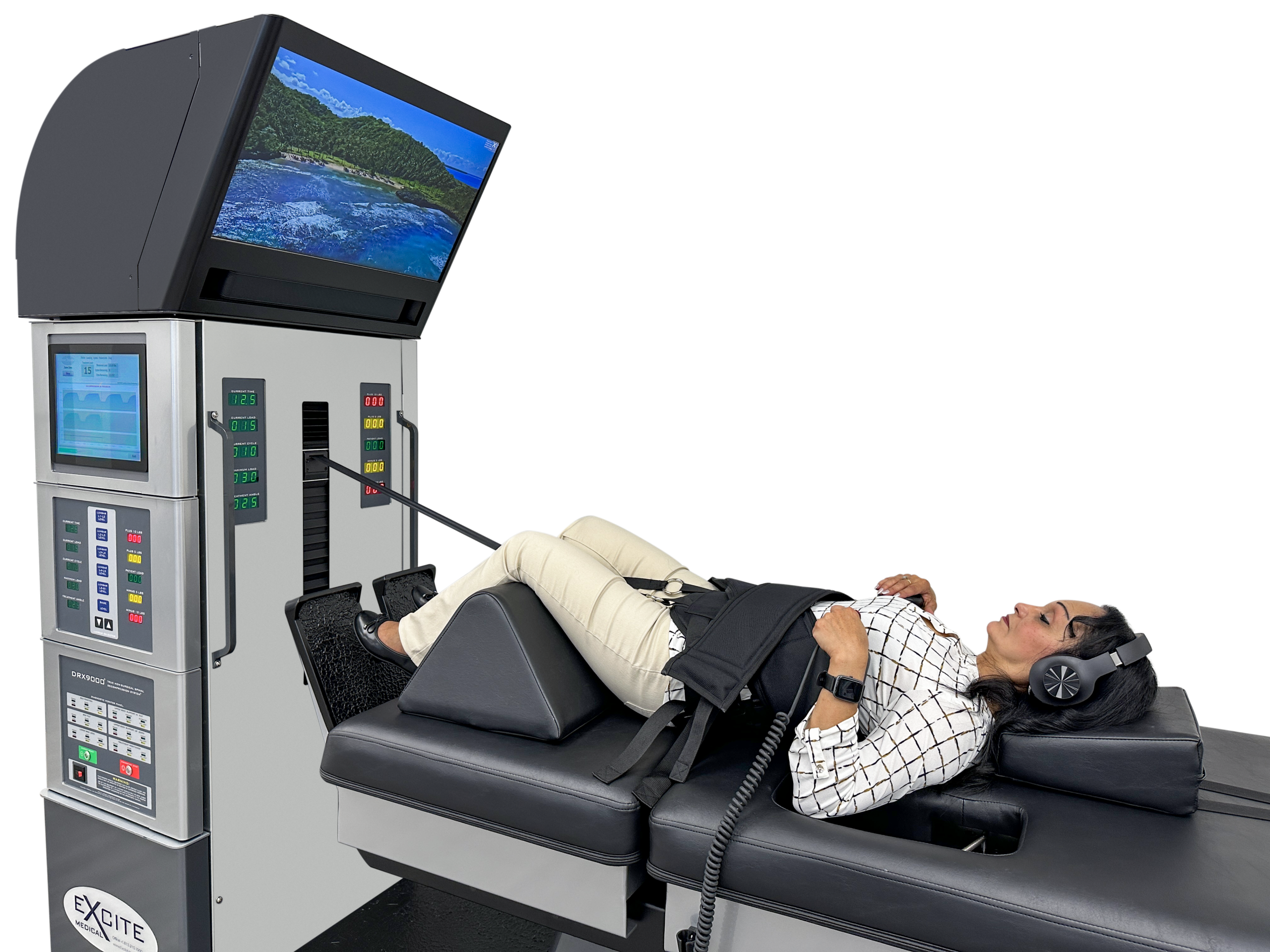
Non-Surgical Spinal Decompression for Real, Lasting Relief.
No Drugs
No Surgery, No Injections
FREE
Consultation & First Treatment
No Downtime
Non-Invasive Treatment
Treating the Disc, Not Just the Pain
Spinal decompression is a non-surgical treatment built to address the disc itself—not just mask chronic pain around it.

Spinal Stenosis

Lumbar Disc Herniation
Cervical Disc Herniation

Sciatica
Lumbar Disc Herniation
The nerves exiting your low back travel all the way down through the buttock and leg. When a lumbar disc bulges or herniates, it can put pressure on those nerves and send sharp, radiating pain down one side of the body—often worsening with activity and resistant to physical therapy or chiropractic adjustments alone.
Our decompression protocol targets the exact angle of the affected lumbar disc, creating the negative intradiscal pressure needed to draw the disc material back and take pressure off the nerve.
Signs you may have a lumbar disc herniation: pain that's usually one-sided · pain that hasn't responded to therapy or chiropractic · pain that worsens with activity · pain radiating into the leg or foot · weakness, numbness, or tingling in the feet.
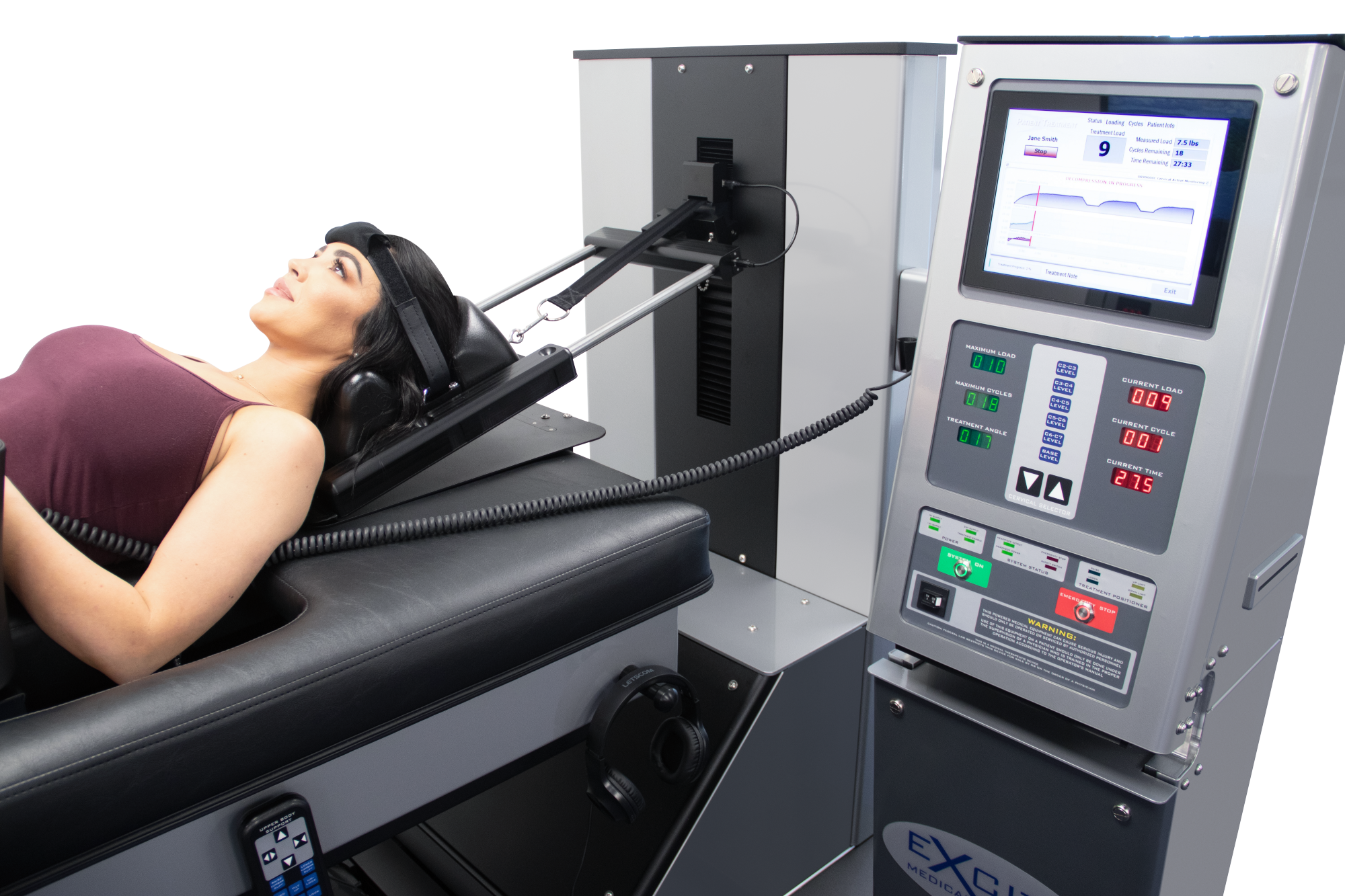
Cervical Disc Herniation
A herniated disc in the neck isn't your typical stiff-neck pain. It's often a deep, boring ache that travels into the shoulder, arm, and sometimes the hand and fingers—along with grip weakness, numbness, tingling, or headaches.
We use cervical-specific decompression to target the disc responsible for the pressure, aiming for lasting relief rather than just a temporary loosening of the surrounding muscles.
Signs you may have a cervical disc herniation: deep, boring neck pain · pain radiating into the arms or hands · numbness or tingling in the hands or fingers · grip strength loss · headaches or migraines.
*Note: Content courtesy - SoftWave Benefits. Originally published at softwavebenefits.com .
Sciatica
The sciatic nerve is the largest nerve in your body, running from the buttock down the back of the thigh to the foot. When a bulging or herniated disc presses on it, the resulting pain can be sharp, burning, and hard to ignore—typically one-sided and worse with movement.
Because sciatica is almost always driven by pressure from a disc, decompression that targets that specific disc tends to outperform treatments that only address the leg or hip where the pain is felt.
Signs you may have sciatica: pain that's usually one-sided · pain that hasn't responded to therapy or chiropractic · pain that worsens with activity · pain radiating down into the leg or foot · weakness, numbness, or tingling in the feet.
Spinal Stenosis
Spinal stenosis is a narrowing of the spinal canal, often caused by a bulging or herniated disc pressing on nearby nerves. That pressure can show up as neck or low back pain, numbness, tingling, weakness, or sciatica—usually worse on one side and worse with activity.
Most treatments for stenosis only manage the symptoms. Our decompression system is built to target the specific disc behind the narrowing and create the negative pressure needed to help it retract off the nerve—addressing the source, not just the discomfort.
Signs you may have spinal stenosis: neck pain radiating into the arms or hands · low back pain radiating into the buttock or legs · numbness or tingling · sciatica · weakness.
*Note: Content courtesy - SoftWave Benefits. Originally published at softwavebenefits.com .
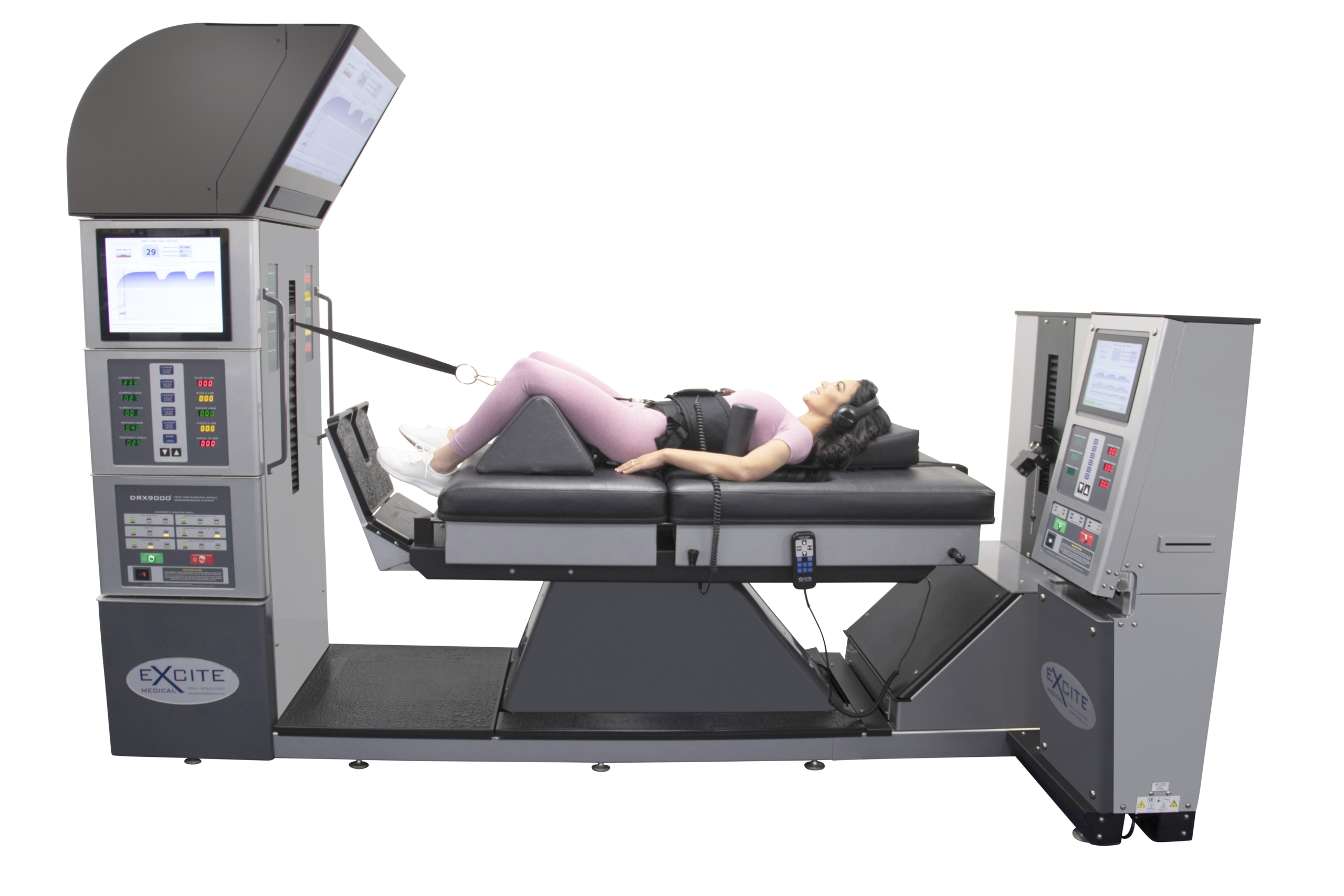
The DRX9000 Decompression System
The DRX9000® is the World's Most Advanced Non-Surgical Treatment for Back and Neck Pain.
We use the DRX9000 Spinal Decompression System, which is proven to un-bulge and un-herniate discs without surgery.
Check out the video below to learn what is involved in spinal decompression.
Computer-Controlled Decompression, Not Traction
Traction pulls your spine in one straight line. True spinal decompression is precise, targeted,
and built around your specific disc.
Angle-Specific Targeting
The system is set to the precise angle of the disc causing your symptoms, so the pull is focused exactly where it's needed—not spread across the whole spine.
Negative Pressure
A slow, controlled pull-and-release pattern creates negative pressure inside the disc, which is designed to draw bulging or herniated material back toward center.
Real-Time Adjustment
An intelligent motor makes fine adjustments many times per second throughout treatment, keeping the session comfortable and responsive to how your body reacts.
Imaging-Guided Diagnosis
Your MRI or X-ray is reviewed before treatment begins, so the exact disc level and angle are dialed in from your very first session.
| Traction / Inversion | VS | True Spinal Decompression |
|---|---|---|
| Pulls the spine in one straight line | vs | Targets the exact angle of the affected disc |
| Generalized, non-specific stretch | vs | Focused on the disc causing your symptoms |
| Can cause discomfort or headaches | vs | Designed to be comfortable — many patients relax or doze off |
| Fixed, constant pull | vs | Computer-adjusted pull-and-release pattern |
Impact Chiropractic's decompression protocol targets the specific disc causing your pain
—not just the surrounding muscles.
Common Symptoms We TreatIf any of these sound familiar, decompression may be worth exploring. |
Common Diagnoses We TreatAlready have a diagnosis? Here's what decompression is most often used for. |
|---|---|
| Chronic low back pain | Herniated disc |
| Neck pain and stiffness | Bulging disc |
| Pain radiating into the arms or hands | Degenerative disc disease |
| Pain radiating into the legs or feet | Spinal stenosis |
| Numbness or tingling in the hands or feet | Sciatica |
| Sciatica | Facet syndrome |
| Muscle weakness or grip loss | Failed back surgery syndrome |
| Headaches linked to neck pain | Pinched nerve (radiculopathy) |
| Pain that worsens with sitting or standing | Chronic disc-related neck or back pain |
Ready to Find Out If Decompression Can Help?
Pick a time below. We'll review your symptoms, discuss your imaging, and map out your next steps—no pressure, no obligation.
Complimentary Consultation & Initial Treatment
- ✓ Consultation with the doctor
- ✓ Imaging & symptom review
- ✓ Same-day treatment if a candidate
Select a date & time
Common Questions
Is spinal decompression painful?
No. Spinal decompression is designed to be comfortable and relaxing. Most patients find the traction gentle enough that they fully unwind during treatment, and many describe it as one of the few times their pain actually eases rather than worsens.
What are the risks of spinal decompression?
Spinal decompression is considered very safe for qualified candidates. Once a thorough evaluation rules out contraindications, the most common side effect is mild, temporary muscle soreness similar to a light workout.
Who should not get spinal decompression?
Spinal decompression isn't appropriate for everyone. Pregnancy, severe osteoporosis, spinal fractures, spinal cancer, and unstable joints are generally considered contraindications, which is why every case starts with a hands-on evaluation and imaging review.
How is spinal decompression different from traction or an inversion table?
Traction and inversion tables pull the spine in one straight, generalized line. True spinal decompression uses a computer-controlled system that targets the precise angle of the affected disc, applying a slow pull-and-release pattern that creates negative pressure at that specific level rather than stretching the spine as a whole.
Does spinal decompression provide lasting relief?
When paired with a rehabilitation protocol that strengthens the muscles supporting the spine, decompression is designed to address the disc itself rather than just calm symptoms temporarily, which is why many patients experience relief that holds up over time.
How many sessions will I need?
It varies by case, but most decompression protocols run over several weeks of sessions. Your treatment plan is built around your specific diagnosis, imaging, and how your body responds along the way.
Do I need an MRI before starting?
An MRI or X-ray helps us confirm you're a good candidate and target the exact disc that's causing your symptoms. If you have recent imaging, bring it to your consultation; if not, we can help you figure out next steps.
What does the complimentary consultation and initial treatment include?
You'll sit down with the doctor, review your symptoms and any MRI or X-ray imaging you bring, get your questions answered, and—if you're a good candidate—receive your first spinal decompression treatment the same day, at no cost.
Complimentary Consultation and Initial Treatment
Take advantage of our no-cost consultation where you can sit with the doctor, review your
symptoms and any MRI/X-rays you have, answer your questions, and even get a spinal
decompression treatment the same day.
